


Article: Why Multi-Parameter Sensing Is the Future of Process Measurement Technology
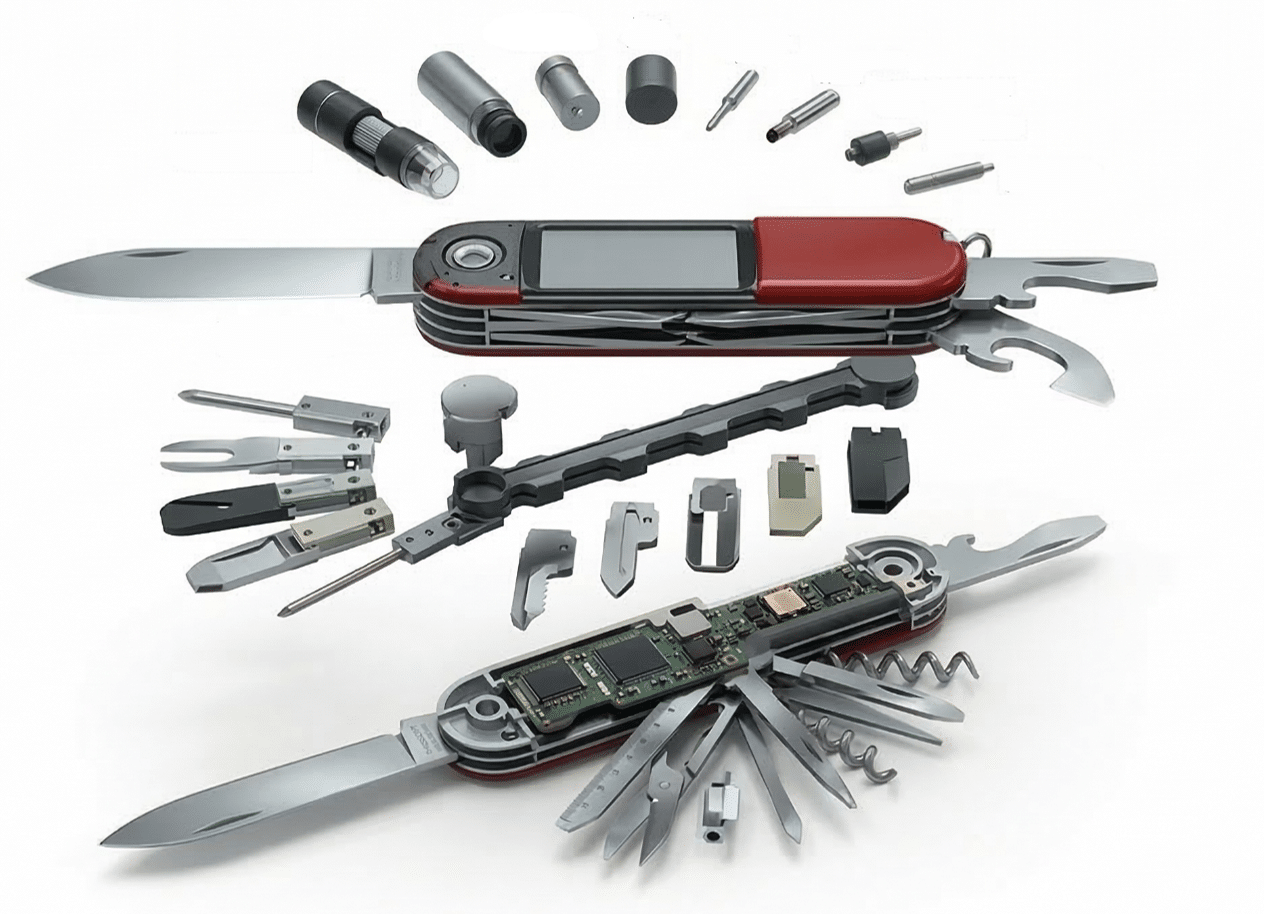
Future Multiparameter Measurement Technology – The Swiss Army Knife Analogy
Multi-parameter sensing combines several measured variables within a single compact system. Using gas flow measurement as an example, TrueDyne demonstrates how integrated density and flow measurement can identify gas mixtures, compensate for measurement errors, and enable more precise real-time process monitoring.
Modern process plants face increasingly demanding requirements. Media are becoming more complex, processes more dynamic, and at the same time, the pressure to reduce costs and increase plant availability continues to grow. Conventional sensor technology is reaching its limits in this environment. Variables such as flow, pressure, temperature, or density are often measured using separate sensors. This not only increases installation complexity but also creates additional sources of error and makes data interpretation more difficult.
This is exactly where TrueDyne Sensors AG comes in: moving away from isolated measurements toward intelligent, integrated sensor systems. Guided by the principle “Rethink Sensing”, the company develops embedded OEM sensors that simultaneously measure multiple physical parameters and directly convert them into actionable process information. The goal is no longer simply to measure, but to deliver real value to the user.
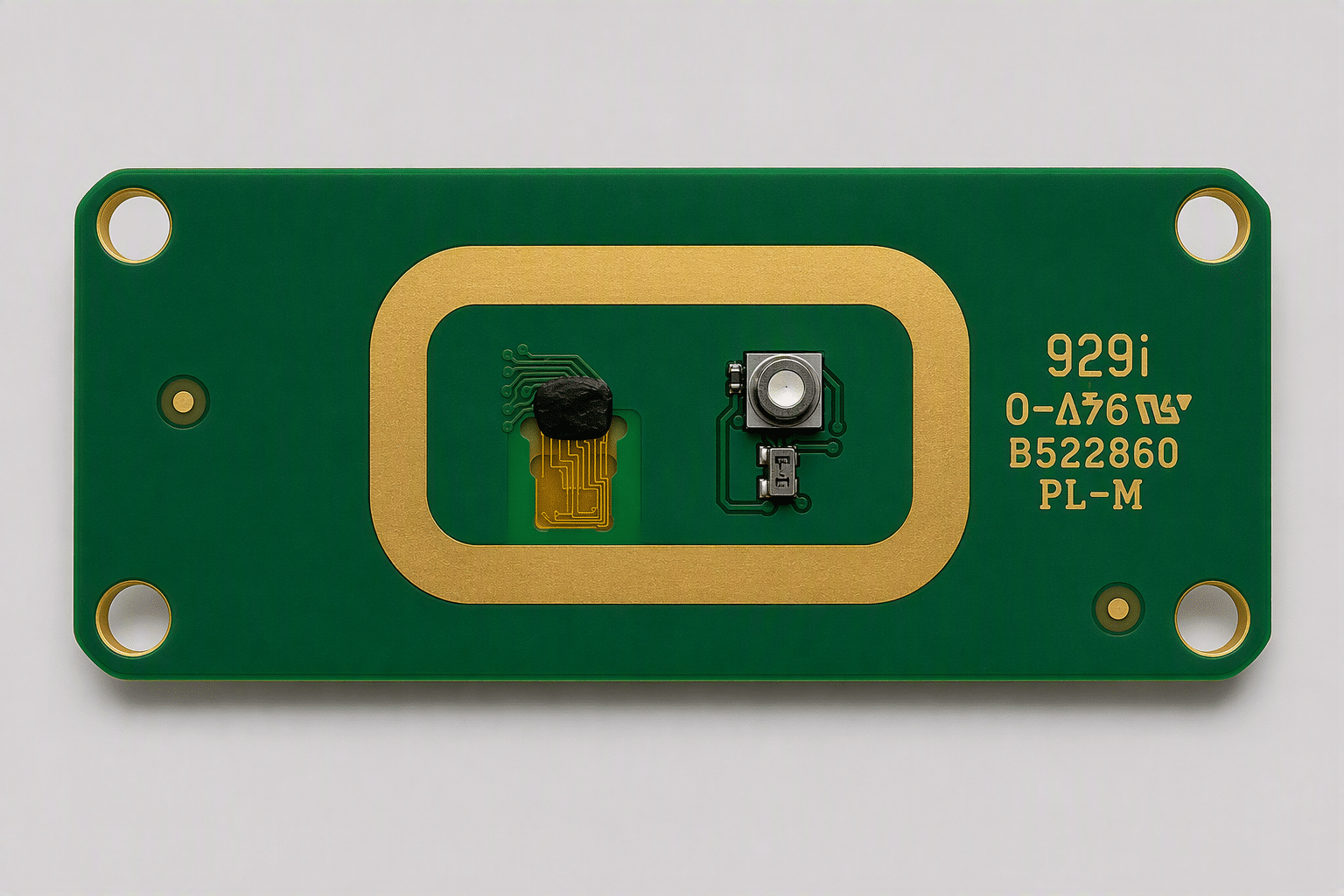
Combined Measurement Technology – Flow and Quality Measurement in One System
From Sensor to a Virtual Laboratory Within the Process
Many industrial processes are influenced by factors that go beyond pure flow measurement. Density, concentration, viscosity, or gas composition often play an equally important role. If this information is not considered, measurement errors and process deviations can occur.
Multi-parameter sensing follows a different approach. Multiple MEMS sensor technologies are combined into a single compact system. Depending on the application, parameters such as flow, density, pressure, temperature, and humidity can be measured simultaneously.
Rather than receiving isolated values, users obtain a physically consistent data set from exactly the same measurement point. This reduces uncertainty and opens entirely new possibilities for process monitoring, diagnostics, and automation.
TrueDyne describes this philosophy as a “laboratory within the process”. Quality parameters are no longer determined through time-consuming laboratory analyses or complex external analyzers, but are measured directly inline and in real time.
Applications range from fuels and natural gases to hydrogen blends, lubricants, inks, and chemical production processes.
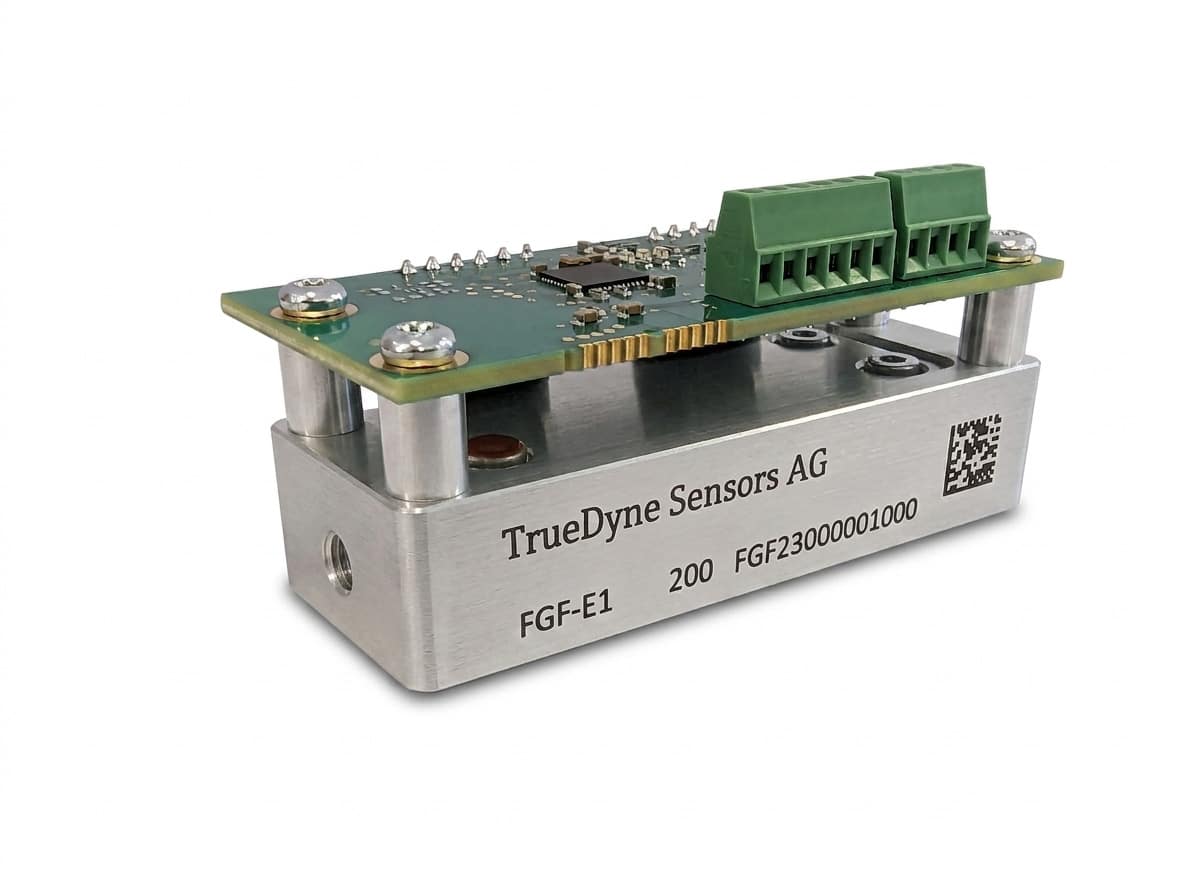
TrueDyne Evaluation Kit for Rapid Testing and Evaluation
The Core Problem of Thermal Flow Sensors
Gas flow measurement provides a particularly illustrative example. Thermal flow sensors are among the most widely used flow measurement technologies today. They are compact, cost-effective, and highly versatile. However, their greatest disadvantage is their dependence on the specific gas being measured.
The sensor signal changes not only with the flow rate but also with the type of gas. If the composition of a gas mixture changes, the sensor cannot distinguish whether the signal variation is caused by an actual flow change or simply by a different gas composition.
As a result, conventional systems often require individual calibration for every gas type. This becomes especially problematic for variable gas mixtures, such as hydrogen blends or industrial mixing processes.
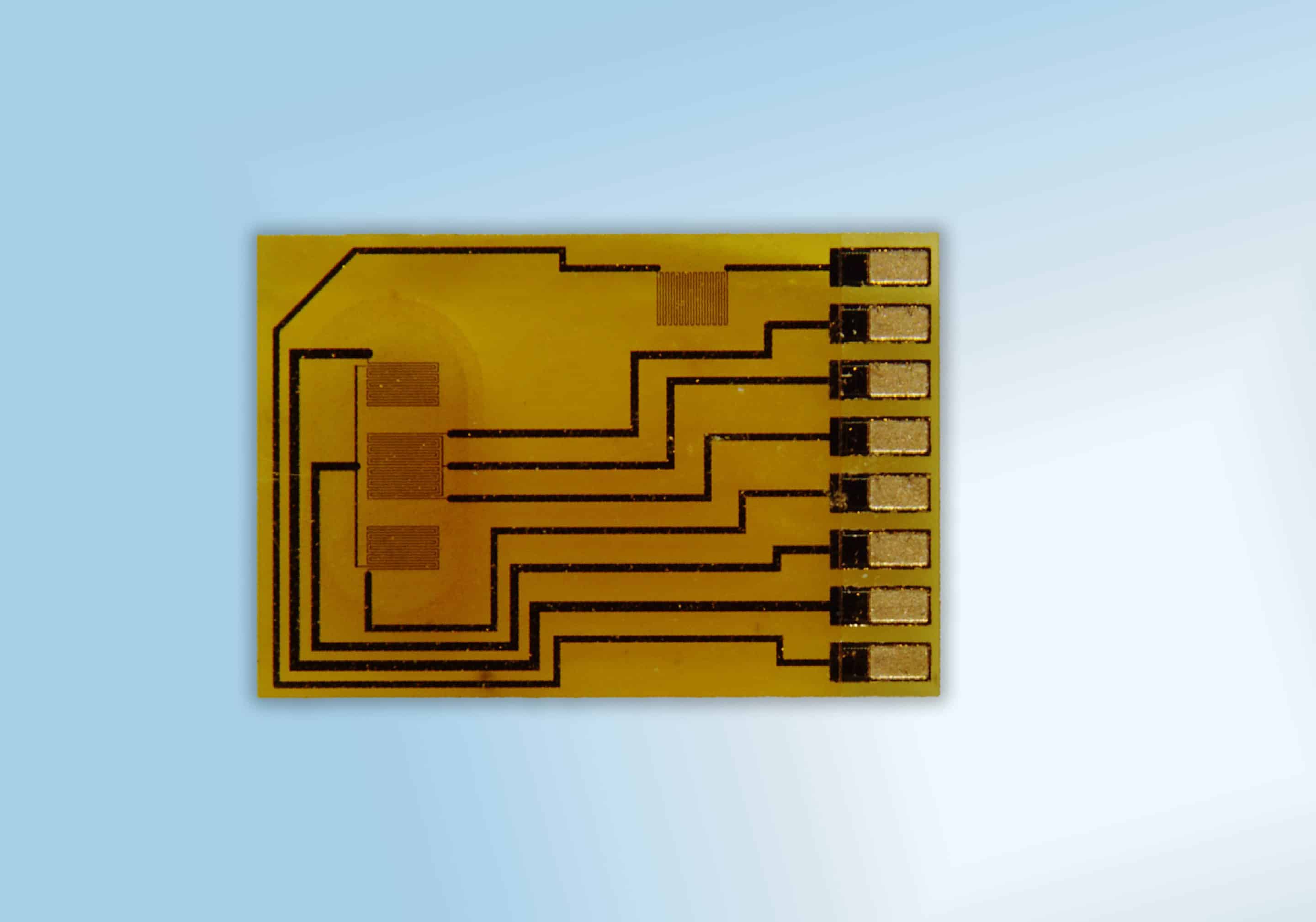
IST AG Basic Flow Chip – MFS02
A Scientifically Validated Solution
To address this challenge, TrueDyne, together with Innovative Sensor Technology IST AG, developed a novel multi-parameter sensor. At its core, the system combines a thermal flow sensor with a vibronic density sensor.
The flow sensor operates according to a calorimetric measurement principle and provides the actual flow information. It is complemented by a miniaturized quartz resonator that measures the density of the medium. From the density value, the gas type can be identified and, in the case of binary mixtures, even the concentration can be determined.
For the first time, this enables automatic correction of the flow signal. The sensor independently detects changes in gas composition and adjusts the flow calculation in real time. As a result, the system provides a gas-independent flow value without requiring complex recalibration. The compact design is particularly impressive. Thermal flow sensing, quartz density measurement, pressure sensing, and temperature sensing are integrated into a highly compact package. The result is a fully calibrated OEM module with digital outputs that can be directly integrated into customer-specific devices.
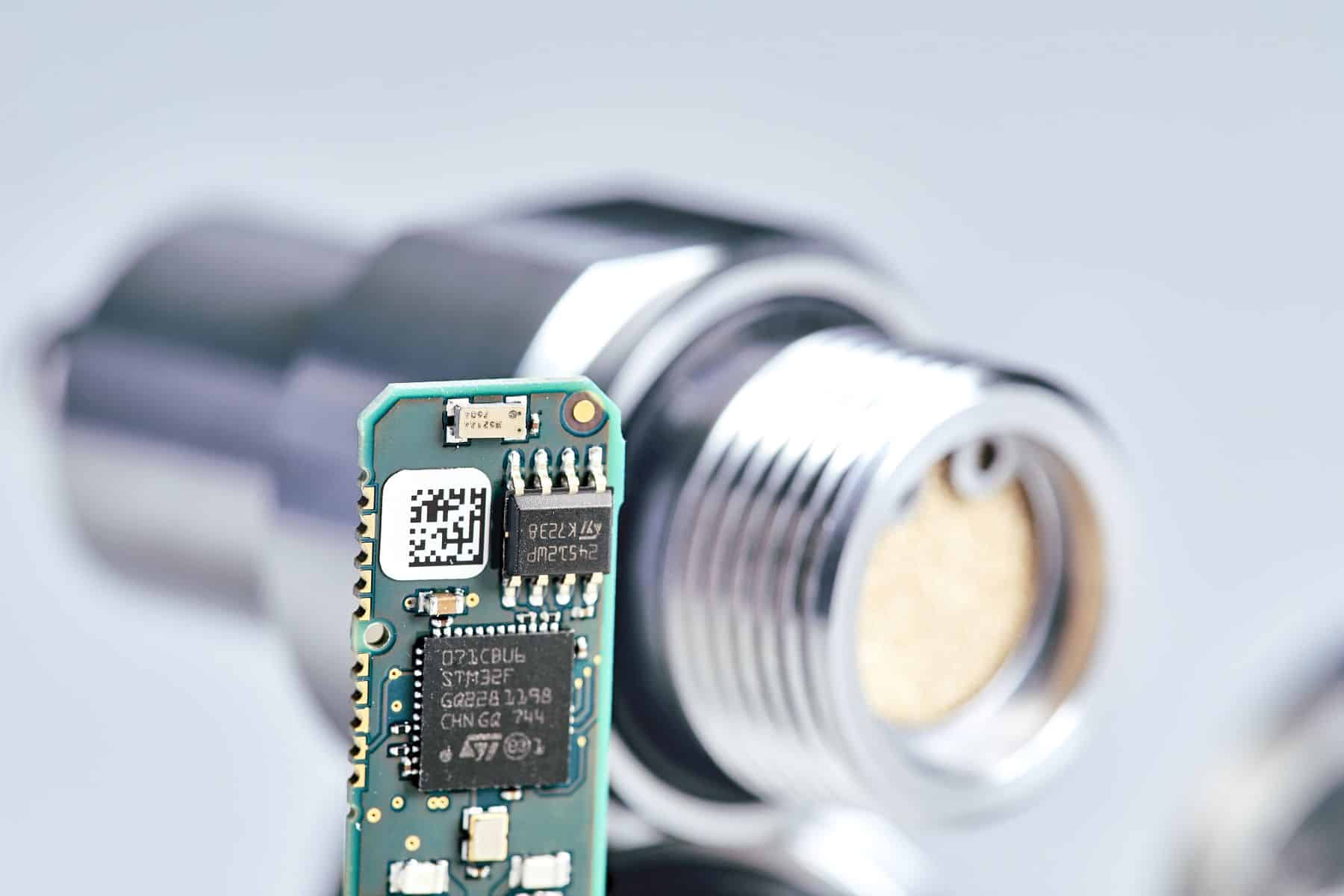
TrueDyne Density Sensor DGF-I1 – Quartz Oscillator
Validation Through Real Measurements
The effectiveness of this concept has been demonstrated through scientific investigations. Published measurement results show that the system can automatically identify different pure gases and apply the corresponding correction factors.
Even more remarkable are the results achieved with binary gas mixtures. By continuously measuring density, the concentration of a gas mixture can be determined almost in real time. The system then automatically compensates for the resulting effects on flow measurement. Even under changing gas compositions, accuracies better than five percent of the full-scale measurement range were achieved. This level of performance has traditionally required gas-specific calibration.
Measurements conducted with CO₂/N₂ mixtures further illustrate this effect. Without correction, significant deviations occur. Once the gas mixture is identified through the integrated analysis and incorporated into the calculation, the flow signal stabilizes and provides consistent results across the entire concentration range.
From Sensor to Intelligent Analysis Tool
Multi-parameter sensing represents a fundamental shift in industrial process instrumentation. Instead of considering process variables separately, measurement values are directly linked and transformed into actionable process information.
The approach developed by TrueDyne demonstrates how flow measurement and quality analysis can be combined within a single sensor. The integration of thermal flow measurement and density analysis enables self-compensating, gas-independent measurement and creates the foundation for more accurate, robust, and digitalization-ready processes.
A sensor becomes an intelligent analysis tool. This is where the true potential of the next generation of process sensors lies.